Barebone Framework
Starting point
Barebone Framework Docs
Barebone Studio
Action
Access Control List (ACL)
Activerecord
Barebone URL's
Blokx
Browser Console
Build php classes with php classes
Condition
Config
Controller
Controller / Application Model
Console
Database
FastAPI
Filter $_POST
HTML
Inspector
JSON
JQGrid builder
Layouts
Log
Loggers
Map
Math
Model
Paginator
Pair
Process
Readers
Request
Response
ReRoute
Save as project
URL Helper
Views
ViewGroup
Writers
Zen coding
controllerModel
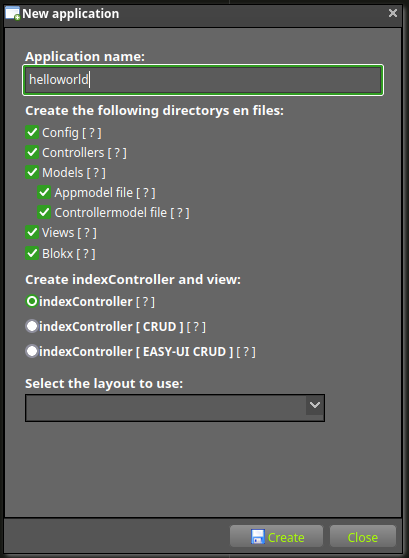
Understanding ControllerModel in the Barebone Framework:
The Barebone framework offers a convenient feature called ControllerModel. It
simplifies the way controllers work with their associated data models by automatically creating a model class with the same name as the
controller.
Imagine:
- You have a controller named
blogController. - Instead of creating a separate model class, the Barebone framework
automatically creates a
blogModelclass for you.
Benefits:
- Simplified naming: No need to come up with unique names for models, making the code easier to understand and maintain.
- Direct access: The controller can directly access the model's methods using
$this->notation. For example,$this->model->getPost($id)would call thegetPostfunction in theblogModelto retrieve a blog post.
Location:
- The
blogModelclass typically resides in a separate folder namedmodelswithin the controller directory. In your example, this would beapplications/frontend/controllers/models/blogModel.php.
Optionality:
- While often automatically generated, the
ControllerModelis not mandatory. You can still create separate, custom model classes if needed.
Example Structure:
applications/
    frontend/
        controllers/
            blogController.php
        models/
            blogModel.php